Everest Region

Everest Base Camp Trek

4.9
985 reviews in TripAdvisor
4.9
51 reviews in Google
3.7
1 reviews in TrustPilot
Duration
14 Days
Difficulty
Strenuous
Maximum Altitude
5,364 meters (17,598 ft)
Starts
Kathmandu
Ends
Kathmandu
Group Size
1-12 People
Best Season
Sep-Nov and Feb-May

Everest Base Camp (EBC) is the closest you can get to Mount Everest, the tallest mountain in the world without climbing. Trekking and helicopter flights are the only ways to reach EBC. More than 40,000 trekkers attempt the Everest Base Camp trek every year, making it one of the most famous treks in the world.

Everest Base Camp Trek | 14 Days Itinerary & Cost 2027

The Everest Base Camp Trek is one of the world's most iconic trekking adventures, taking you deep into the heart of the Nepalese Himalayas and to the base of Mount Everest (8,848.86 m), the highest mountain on Earth. This unforgettable journey combines breathtaking mountain scenery, rich Sherpa cuslture, ancient Buddhist heritage, and a rewarding high-altitude trekking experience.

Beginning with a scenic flight to Lukla, the trail passes through picturesque Sherpa villages, lush forests, suspension bridges, and the spectacular landscapes of Sagarmatha National Park before reaching Everest Base Camp at 5,364 meters. Along the way, trekkers enjoy panoramic views of Everest, Lhotse, Nuptse, Ama Dablam, and numerous other Himalayan peaks. The trek also includes a visit to Kala Patthar (5,545 m), the region's most famous viewpoint, offering unparalleled views of Mount Everest.

More than just a trek, the Everest Base Camp journey is a remarkable blend of natural beauty, cultural discovery, and personal achievement. Whether you are an experienced trekker or a first-time Himalayan adventurer, this world-renowned route promises an inspiring and once-in-a-lifetime experience in the shadow of the world's highest mountains.

Everest Base Camp Trek Highlights:

  • Reach the iconic Everest Base Camp (5,364 m) and witness the grandeur of the world's highest mountain.
  • Hike to Kala Patthar (5,545 m) for breathtaking panoramic views of Everest and the surrounding Himalayan peaks.
  • Trek through Sagarmatha National Park, a UNESCO World Heritage Site known for its spectacular mountain landscapes.
  • Experience authentic Sherpa culture, traditional villages, and ancient Buddhist monasteries.
  • Explore the stunning Khumbu Glacier, suspension bridges, and diverse Himalayan scenery.
  • Enjoy the exciting mountain flight to Lukla, the gateway to the Everest region.
  • Challenge yourself with one of the world's most famous and rewarding trekking adventures.

Everest Base Camp Trek Distance, Duration, and Altitude

The Everest Base Camp trek distance is approximately 130 kilometers (81 miles), combining both sides. You will walk 9 to 11 km each day during the trek.

It is a 14 days trip. You will hike for 11 days and spend the remaining day traveling to/from Lukla and arriving/departing from Kathmandu.

Kathmandu is situated at 1,400 meters (4,593 ft). You will start hiking from Lukla at 2,846 meters (9,337 ft). Your first night will be in Phakding village (2,610 m/8,563 ft).

Our Everest Base Camp Trek Itinerary has Two Acclimatization Days. One is in Namche Bazaar, and another is in Dingboche village. You will hike in the morning and spend the remaining day resting.

Everest Base Camp (5,364 m/17,598 ft) and Kala Patthar (5,545 m/18,129 ft) are the highest point on this trek.

Mount Everest
Mount Everest

Witness Unparalleled Views of Some of the Tallest Mountains in the World and Breathtaking Landscapes

We cannot even count the number of mountains you will see during Everest Base Camp hiking. As the journey unfolds, the mountains will uncover their grand views and bless you with a powerful energy.

Some of the most stunning mountains you will see are Everest, Thamserku, Ama Dablam, Lhotse, Nuptse, Taboche, Pumori, Island Peak, Makalu, Cho Oyu, Cholatse, etc.

Likewise, you will also relish changing landscapes with the change in altitude and catch many gorgeous sunrises and sunsets. If the sky is clear, you will enjoy many starry nights.

A Close Glimpse of Sherpa's Lifestyle and Culture, Visit Ancient Monasteries and Spin Prayer Wheels on the Trail

Sherpas are the hallmark of the Everest region, and trekking to Everest Base Camp provides a huge opportunity to get to know them closely. You will see their lifestyle and have many interactions with them.

Likewise, Tengboche Monastery and Pangboche Monastery are the two main monasteries on the Everest Base Camp route. You will visit both of them. It will show you the rich cultural heritage of the locals.

Similarly, you will see many prayer wheels and prayer flags all over the trail. They mean to send good luck to the trekkers and the locals and protect them.

Discover the flora and fauna of Sagarmatha National Park

The Everest Base Camp route is inside the Sagarmatha National Park. You will officially enter the park from Monjo village onwards. The national park has multiple ecosystems.

In the first few days of the trek, you will walk through lush rhododendron and magnolia forests that gradually change to pine forests and bushes. Then, you will enter the alpine zone, where you will see glaciers, moraines, and mountains.

Experience a Thrilling Flight to/from Lukla Airport in a Teeny Tiny Airplane

We cannot overlook the thrill of the Lukla flight. Flying in a tiny propeller plane in one of the highest and smallest airports in the world is definitely worth the hype.

Test your endurance and resilience and push out of your comfort zone

The Everest Base Camp trek is far more than just an adventurous trip. If we talk at a deeper level, this voyage will push you to get out of your comfort zone.

Unless our bodies give up, we do not back up on the mountain. We stay strong and keep moving ahead. And the entire community will cheer for you and wish you good luck.

Daily 6 hours of hiking, high altitude, rugged terrain, and limited services will break you. But at the same time, nature, tranquility, fresh air, and endurance will shape the new you.

Reaching Everest Base Camp is not the only achievement you will get on this trek. You will also conquer your limits!

A digital detox and hidden health benefits

We do not see many people talking about the health benefits that the Everest Base Camp trek has. For starters, it is a great digital detox. The network is not good at high altitudes, so you are forced to get off your phone and live in the moment.

Apart from Lukla, Phading, and Namche Bazaar, you will not have access to junk food. Even if you get a few options in some villages, the price will be absurd. So, you will mostly eat fresh and nutritious food that will heal your body.

Finally, you will feel great in your body. Long walking for a straight nine days will make you feel lighter and more confident.

Is the Everest Base Camp Trek Suitable for You?

The very first thing anyone should consider for the EBC trek is their fitness. If you believe you are physically fit for the Everest Base Camp trek, you are most welcome to join us on this lifetime trip.

Please note that it is a multi-day trek through rugged terrain and high altitude. The trail is not flat and involves frequent ascents and descents. Therefore, trekkers have to be in good shape to not just complete the trek but also enjoy the journey.

You have to be okay with sleeping at basic lodges along the way and having simple mountain food. For most of the trek, you will not be connected to the rest of the world. Most importantly, you will walk for 6 hours a day on average.

If you think you can take on these challenges, Everest Base Camp trekking is suitable for you. However, if you are not physically and mentally ready, book the trek early and start preparing.

Everest Base Camp trek preparation/training plan

  • Strength and stamina: Weight training will make your core and leg muscles strong. Likewise, cardio exercises such as running, jogging, swimming, and cycling will improve your stamina and endurance.

  • Walking: You have to walk a lot during the Everest Base Camp trek. So, it is better you get used to it before the trek starts. Go on regular long walks with a backpack weighing 5 kg.

  • High altitude: The only way to prepare for high altitude is by experiencing it. If there are hiking trails around your home, consider doing a few hikes before the trek. Likewise, you can also go on short 2-3 days treks near you.

  • Mental preparation: The more you learn about the Everest Base Camp route, the more you will be mentally prepared. Your understanding of the trek is very important. Read blogs and see videos of trekkers who have already done the EBC trek. It will help you a lot.

Are There Hot Showers and Electricity on the EBC Trek?

Hot showers are available, but you have to pay extra for the service. Why? Because of expensive gas and wood. You may have to pay USD 3 to USD 5 per shower.

Most lodges and tea houses depend on solar power, which they have installed at a high cost. So, charging your equipment costs around USD 2 to USD 3 or a bit more per device.

Everest Base Camp Trek Helpful Tips for Trekkers

  • To fly to Lukla, the weather has to be ideal. A slight disruption in weather can delay or cancel the flight. So, we highly recommend that trekkers budget for 2-3 days' expenses and a helicopter flight expense just to be on the safe side.

  • Shared helicopter flights are not that expensive, so keep it an option.

  • A single room costs extra money, so if you are traveling alone, please click on the single supplement during checkout or contact us.

  • Please read about all the seasons and pick the one that best suits your preferences. We organized the Everest Base Camp trek throughout the year.

  • Your duffel bag weight limit is 9 kg per person, and your day pack weight limit is 5 kg per person.

  • Kindly pack extra pairs of pants, t-shirts, socks, and undies. Trust us, you will need it. You cannot do the EBC trek in 1-2 pairs of t-shirts and pants. It's gross.

  • Budget 20% of the package cost or USD 100 to USD 120 to tip guide and porter.

  • Do not drink alcohol or smoke during trekking. It will dehydrate your body and increase the risk of altitude sickness.

  • You will share the trail with donkeys and yaks. Always wait and let them pass first. Stand on the cliff side and let them walk on the edge side.

  • Snacks and bars cost very high along the EBC trail, so buy them in Kathmandu.

  • Water bladder and electrolytes are highly recommended.

  • Download music, podcasts, movies, etc, for the journey.

  • It is best to stick with vegetarian food during the trek, especially when you go above Tengboche village. If you want to eat non veg, make sure to inquire about the freshness of the meat.

  • The network is not good in the Everest region. So, do not fixate on sharing the journey right away. Enjoy your time in the mountains, and share your trip after returning to Kathmandu.

Are You on a Short Holiday, or Do You Have Less Than 14 Days to Trek?

We have many Everest Base Camp trek packages, so whether you are on a short holiday or a long one, you will have an option. Some of our short EBC trek options are:

Likewise, you can customize the Everest Base Camp trek itinerary to your requirements. Bookings are open for Everest Base Camp 2026/2027 departures. Book your seat early and start preparing. We also take last-minute bookings.

Combine a Helicopter Flight from Gorak Shep to Kathmandu and Make the Itinerary Three Days Short

After reaching Everest Base Camp and Kala Patthar, you have to follow the same trail back to Lukla. It takes three days to descend and involves around 65 km of walking.

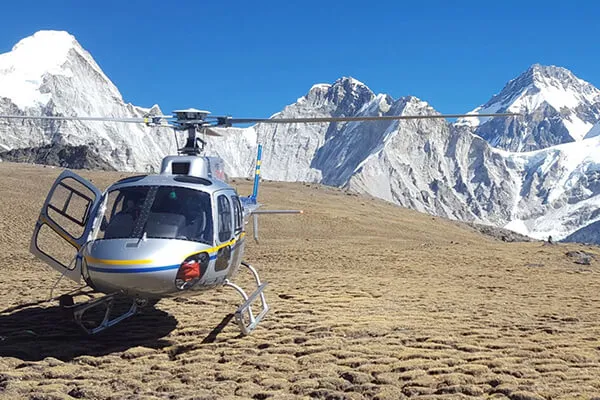
By combining helicopter returns from Gorak Shep, you can skip the return trek and save three days that you can use to explore Kathmandu. It is also ideal for travelers who are on a short vacation.

A helicopter flight in your Everest Base Camp trek makes the journey more exciting. You will witness an aerial view of the Khumbu Glacier, Khumbu Icefall, all the villages that you trek through, and definitely the mountains.

Everest Base Camp Trek Guide and Porter

In this package, you will get a professional guide and a local Sherpa porter for the journey. Guide and porter trek with you. It ensures your safety and comfort in the mountains and makes the journey more meaningful.

You will learn a lot about the locals and mountains from your guide. Likewise, he will get you the best rooms and services along the trail. Similarly, porters carry your duffel bag during the trek.

Do you have to tip a guide and porter? Yes, it is a custom in Nepal to tip your guide and porter after their service. They work very hard and make sure you have the best time in the mountains. So, it will be only fair if you tip them.

Take tips as a way to show your gratitude. There is no fixed amount. You can tip whatever amount you think is okay. For general guidance, if you are trekking in a group, every member can contribute USD 100 and tip collectively to the guide and porter.

Benefits of Booking the Everest Base Camp Trek from Pokhara with Welcome Nepal Treks

There are many companies that are selling Everest Base Camp trek packages. Everyone has something different to offer, and so do we. We, Welcome Nepal Treks, have been operating treks in the Everest region and other parts of the Himalayas for more than 12+ years.

Our knowledge and strong team make us a reliable partner for your Everest Base Camp hike. We will be with you at every part of the journey, making it seamless, safe, and fun.

Below, we have shared some of the perks that trekkers get with us during the Everest Base Camp trek 14 days:

  • Best Everest Base Camp price in the market. No hidden cost and full transparency.

  • Customizable itinerary.

  • Expert mountain guide and Sherpa porter.

  • 24/7 support and a friendly team to help you prepare for the journey.

  • We take care of permits, transportation, accommodation, and all other logistics included in the trek.

  • Complementary airport pick-ups and drop-offs.

  • Complimentary company t-shirt and trek certificate.

  • Duffel bag, first-aid kit, and oximeter to use during the trek.

During peak trekking seasons—spring (March–May) and autumn (September–November)—most commercial flights to Lukla for the Everest Base Camp trek depart from Manthali Airport in Ramechhap instead of Kathmandu’s Tribhuvan International Airport.

Everest Base Camp Trek Itinerary

Starts
Kathmandu
Ends
Kathmandu
Day 1

Welcome to Kathmandu and transfer to the hotel.

Our team will be at the Tribhuvan International Airport to welcome you to Kathmandu, Nepal. They will escort you to the hotel and help you check in.

Later in the day, you will meet your trek guide and do the final shopping. Pack your duffle bags and spend the evening enjoying Thamel's lively Thamel

Kathmandu Airport
Max Altitude: 1,320m (4,330ft)
Duration: 1 Hour
Accommodation: 3 Star Hotel
Day 2

Fly from Kathmandu/Ramechhap to Lukla airport and trek to Phakding (2,610 m/8,563 ft)

The Kathmandu-Lukla flight is short and scenic. From Lukla, you will walk downhill to Phakding village. The trail goes through rhododendron-forested hills, crossing many suspension bridges over the Dudh Koshi River.

On the way, you will also trek past small settlements. Today, you will see lovely views of Mt. Chamlang and Kongde Ri.

*Note: If you take the Lukla flight from Ramechhap Airport, you will leave your hotel around 2:00 AM to reach the airport on time. It takes around 4 to 5 hours to reach Ramechhap Airport from Kathmandu.

Max Altitude: 2,846m (9,337ft)
Duration: 35 minutes flight & 3 hours trek
Accommodation: Tea house Lodge
Day 3

Trek from Phakding to Namche Bazaar

Continue trekking from Phakding to Namche Bazaar. You will cross the long Tenzing Hillary Suspension bridge on the way. At Monjo, permits are registered, and the Sagarmatha National Park officially starts after this village.

The majority of the hike is uphill and goes through lush forests. The trail will get steep and rocky as you get close to Namche Bazaar. You will see views of Mt. Kusum Kangaroo, Mt. Thamserku, and Kongde Ri during hiking

Max Altitude: 3,440m (11,286ft)
Duration: 5-6 Hours
Accommodation: Tea House Lodge
Day 4

Acclimatization day- hike to Everest View Hotel or Khumjung Village (3,790 m/12,434 ft)

It is an acclimatization day. You will spend the morning hiking to Hotel Everest View, famous for Mt. Everest view from all its windows. The hiking route is an uphill walk, and you will see stunning views of Mt. Thamserku on the way.

Likewise, you can also extend the hike to Khumjung Monastery or return to Namche Bazaar. Visit the Sherpa Culture Museum, Sagarmatha Next (art gallery), Irish Pub, etc

Max Altitude: 3,962m (12,998ft)
Duration: 4-5 hours
Accommodation: Tea House Lodge
Day 5

Trek from Namche Bazaar to Tengboche Village

You will ascend to Tengboche village from Namche Bazaar, passing by Kyangjuma and Phungi Thanga. The trekking route is uneven and rocky. The first few hours will be a long descent, and then you will follow a zigzag uphill trail to reach Tengboche.

The view of Mt. Amal Dablam and Mt. Everest is excellent behind the Tengboche monastery. Fun fact: Tengboche monastery is the biggest monastery in the Everest region

Max Altitude: 3,860m (12,664ft)
Duration: 5-6 hours
Accommodation: Lodge
Day 6

Trek from Tengboche to Dingboche

Leaving Tengboche village, you will walk downhill and pass by Deboche village. The trail further descends to Imja Khola and ascends from here to Dingboche village. On the way, you will pass by villages like Pangboche, Orsho, and Shomare. Enjoy stunning mountain views along the trail

Max Altitude: 4,410m (14,468ft)
Duration: 5-6 Hours
Accommodation: Tea House Lodge
Day 7

Acclimatation day in Dingboche. Hike to Nagarjun Hill or Chhukum

You will spend one more acclimatization day in Dingboche village. It is also crucial to avoid altitude sickness. You will hike to Nagarjun Hill early in the morning. The view of Everest, Island Peak, Makalu, Ama Dablam, and other mountains is breathtaking from here.

There is also an alternative hiking option to Chhukung Valley.

Max Altitude: 5,100m (16,732ft)
Duration: 4-5 hours
Accommodation: Tea House Lodge
Day 8

Trek from Dingboche to Lobuche

The trail from Dingboche to Lobuche gradually ascends above the tree line and follows rocky terrain to Dughla Pass (4,830 m/15,846 ft). You will then cross a bridge and follow offbeat terrain along the Khumbu Glacier to reach Lobuche village. The mountain views are stunning on the way.

Max Altitude: 4,940m (16,207ft)
Duration: 5-6 hours
Accommodation: Tea house lodge
Day 9

Trek from Lobuche to Gorak Shep (5,164 m/16,942 ft) to Everest Base Camp and back to Gorak Shep for a night's stay

It is the big day of your trek. You will hike to Everest Base Camp. The first phase of the day involves walking uphill to Gorak Shep, where you will leave your heavy luggage and continue to the base camp.

The trail from Lobuche to Gorak Shep is rocky and steep. Likewise, the terrain from Gorak Shep to EBC involves hiking loose rocks and huge boulders.

Explore the Everest Base Camp and see the up-close view of the Khumbu Glacier before returning to Gorak Shep to spend the night

Max Altitude: 5,364m (17,598ft)
Duration: 6-7 Hour
Accommodation: Tea house lodge
Day 10

Hike to Kala Patthar early in the morning and trek down to Pheriche (4,371 m/14,340 ft)

The day starts early with a hike to the Kala Patthar viewpoint. The hike will be gradual along uneven terrain. At Kala Patthar, you will see a stunning sunrise and a breathtaking view of Mount Everest and the surrounding mountains.

After enjoying the view, we will return to Gorak Shep and trek to Pheriche village to spend the night. The trail descends following the same trail to Lobuche village. From here, we will follow a different route to Pheriche village

Max Altitude: 5,545m (18,192ft)
Duration: 7-8 Hour
Accommodation: Tea house lodge
Day 11

Trek from Pheriche to Namche Bazaar

From Pheriche, you will trek back to Namche Bazaar. You will mostly walk downhill and pass by small settlements on the way. The first half of the trail will be tranquil, and then you will join the main route that leads to Namche Bazaar

Max Altitude: 3,440m (11,286ft)
Duration: 6-7 Hour
Accommodation: Tea house lodge
Day 12

Trek from Namche Bazaar to Lukla

Namche Bazaar to Lukla, the trail goes through lush rhododendron forests. You will cross many suspension bridges again. The trail gradually descends to Phakding and ascends along the Dudh Koshi River to Lukla. Celebrate the success of the trek later in the evening with your crew.

Max Altitude: 2,846m (9,337ft)
Duration: 6-7 Hour
Accommodation: Tea house lodge
Day 13

Flight back to Kathmandu or Manthali/Ramechhap from Lukla and same day drive to Kathmandu

After completing the long adventurous trekking journey, now you will be flying back to Kathmandu taking unforgettable memories. When returning from Lukla to Kathmandu, the typical departure is from Lukla Airport. The travelers will fly from Lukla airport to Kathmandu with the duration of approximately 35 minutes. Upon arrival in Kathmandu, passengers will be transferred to their hotels via comfortable vehicle, ensuring a smooth transition from air to land travel.

But the peak seasons like spring and autumn experiences high air traffic. In these cases, flights may be routed from Ramechhap/Manthali. The flight from Lukla to Manthali is a 20-minute flight. Upon arrival take a scenic drive back to Kathmandu. The drive is about a 5-to-6-hour to Kathmandu, witness beautiful sceneries and be transferred to your accommodations safely.

Max Altitude: 1,400m (4,593ft)
Duration: 35 minutes flight
Accommodation: 3 Star Hotel in Kathmandu
Day 14

Departure Day

We will drop you at the international airport on this day. Kindly get ready to leave the hotel at the designated time and double-check your room before leaving.

This is a regular day-to-day itinerary. If it doesn’t match your preferences, we will customize it according to your interests.

Are you still confuse from where to start?

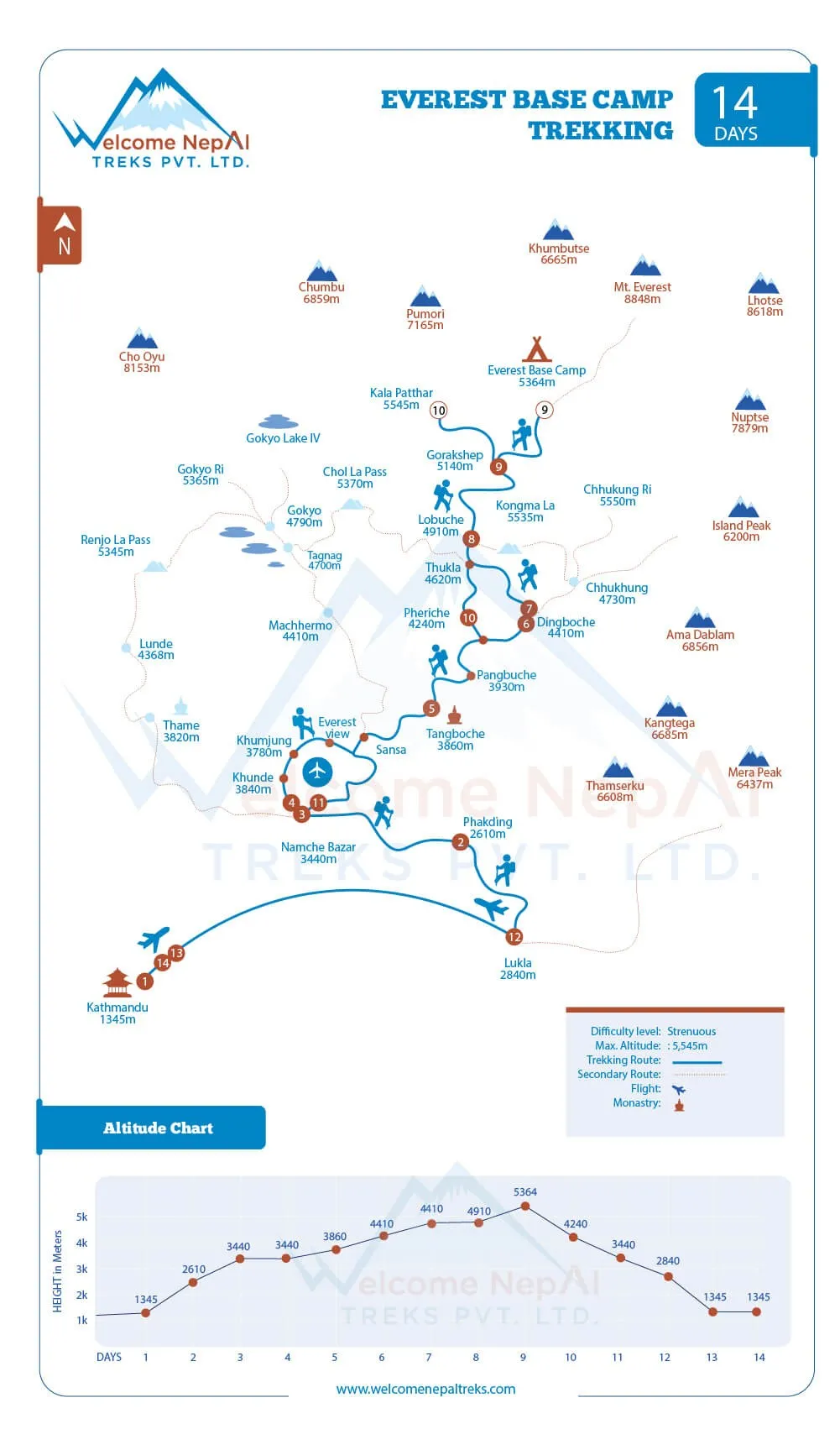
Route Map & Altitude Chart

Everest Base Camp Trek

Cost Details

Includes

  • Airport picks up and drops by private car/van/bus.
  • 3-star accommodation in Kathmandu-Thamel Eco Resort or The Address Kathmandu Hotel (on the arrival day and after the trekking).
  • Your standard meals (Breakfast, Lunch and Dinner) during the trekking.
  • Domestic airport picks up and drop by car/ Flight Ticket (LUK-KTM-LUK) / domestic airport Tax.
  • All accommodations in lodges/tea houses during the treks (breakfast, lunch & dinner)
  • Sagarmatha National Park entry permit fee
  • Khumbu Pasang Lhamu Rural Municipality fees
  • Seasonal fresh fruit throughout the trek.
  • An experienced, helpful and friendly Guide, porters (1 porter for 2 peoples).
  • Porter to help trekkers luggage. 2 trekkers will share 1 porter, Max weight limit for a porter- 20 kg (10 kg per trekker, weight limit). You can store non-essential items in your hotel or at the WNT store.
  • Covers guides' and porters' wages, their meals, insurance, lodging, transportation, flight, and other necessary equipment
  • Dawn jacket, sleeping bag & duffle bag If required. (Refundable after finish trekking).
  • Water purification tablets during the trek for safe drinking water.
  • An arrangement of Emergency Helicopter service will be paid by your Travel insurance company.
  • An oximeter to monitor your oxygen and pulse levels during mountain treks is very helpful for all trekkers to be aware of altitude sickness.
  • Medical kit bag.
  • Farewell dinner in typical Nepali Restaurant with cultural dance show
  • All our government taxes, vat, official expenses & service charges

Excludes

  • Nepal entry visa fee (you may easily issue the visa upon your arrival at Tribhuwan International Airport - Kathmandu). You will require 2 passport size photos.
  • Your Travel insurance.
  • Lunch and dinner while you are in Kathmandu.
  • All the alcoholic and non alcoholic Drinks.
  • Sweet things like chocolate.
  • Hot shower during the trekking.
  • Tipping (expected by guides and porters, but not mandatory)

Date & Availability

Select Departure Dates
Nov 2026
Start Date
Nov 30, 2026
End Date
Dec 13, 2026
Status
Guaranteed
Price
US$1600
US$1700

Departure Notes for Everest Base Camp Trek, 14 Days

The Everest Base Camp Trek sees off a great traveling experience with Welcome Nepal Treks. You can choose your day of the trek on the website and choose the day that matches your time and wish. Welcome Nepal Treks fixes the departure dates for the Everest Base Camp Trek 14 Days so that every important service and facilities like accommodation, guides, porters, and transportation services would be arranged. It is best to join the Everest Trek on the scheduled dates. If by any case, you miss the scheduled date. There is no need to worry. Welcome Nepal Treks organizes the Everest Trek in small groups with 2 to 10 trek members so that solo travelers can also enjoy the EBC Trek.

Welcome Nepal Treks plans your for 14 Days Everest Base Camp Trek Fixed Departure in such a way that you get to be familiar with people from different countries where you can get the feeling of fraternity and love. The experienced guides along with friendly porters make the trek extra special. In any cases, if the departure date is missed because of some complications, you don’t have to worry about anything. Welcome Nepal Treks makes sure your trip plan doesn’t get affected by any means.

Add-Ons & Options

Add-on features can make your trek more comfortable and successful.

Porter Service
Let our experienced porters handle your luggage so you can fully enjoy the stunning scenery of the Everest region. Each porter can carry up to 25 kg and may be shared between two trekkers.
US$220
per porter

Equipment List

What to Pack for Everest Base Camp?

You will need different types of clothes and gear and many small essentials for the Everest Base Camp trek. We have made a comprehensive list below:

  • Duffel bag
  • Day pack
  • Trekking poles
  • Sleeping bag with liner
  • Trekking boots
  • Casual shoes/crocs
  • Comfortable, breathable underwear
  • Trekking t-shirts and pants
  • Thermal layer
  • Fleece jacket
  • Down jacket
  • Windproof/waterproof jacket and pant
  • Liner gloves (touch-screen compatible), fuzzy gloves, thermal socks, liner socks, beanie, and scarf
  • Double layer buff
  • Dry towel
  • Sun hat and UV sunglasses
  • Portable torch, knife, map
  • Reusable water bottles and water purification tablets
  • Water bladder
  • Personal first aid kit (pain relief gel/spray, general medicine, bandaids, insect repellant, crack bandage, ointment, hand sanitizer, etc)
  • Toiletries (deodorant, SPF, lip balm, moisturizer, comb, toothpaste/brush, soap, toilet paper, wet tissues, etc)
  • Nuts, energy bars, snacks, ORS (electrolyte powder)
  • Travel insurance documents, valid passport, passport-size photo, cash, credit/debit cards, Nepal travel visa

Essential Information

General Information

  • Trek Region: Everest (Khumbu Region)
  • Maximum Altitude: Kala Patthar (5,545m)
  • Base Camp Altitude: 5,364m
  • Trek Duration: 14 Days
  • Accommodation: Tea Houses and Lodges
  • Trek Type: Non-technical Hiking Trek
  • Starting Point: Kathmandu / Lukla
  • Ending Point: Lukla / Kathmandu
  • Grade: Moderate to Challenging
  • Best Seasons: Spring and Autumn
  • Maximum Temperature: 15°C to 20°C (Lower Regions)
  • Minimum Temperature: -15°C to -20°C (Higher Regions in Winter)
Village   Altitude
Lukla 2,860 m
Phakding 2,610 m
Lamche Bazzar 3,440 m
Khumjung Village 3,790 m
Tengboche 3,860 m
Dingboche 4,410 m
Lobuche 4,910 m
Gorakshep 5,164 m
Kala Patthar 5,545 m
Everest Base Camp 5,364 m
Pheriche 4,371 m
Ramechhap 1218 m

Where is Everest Base Camp?

Everest Base Camp lies within:

  • Sagarmatha National Park
  • Solukhumbu District
  • Koshi Province, Nepal

It is situated on the southern side of Mount Everest at the edge of the famous Khumbu Glacier.

The trek begins after a flight to Lukla, a small mountain town often called the "Gateway to Everest."

Flora and Fauna of the Everest Region

The Everest Base Camp Trek passes through Sagarmatha National Park, a UNESCO World Heritage Site renowned for its diverse ecosystems, ranging from dense forests and alpine meadows to glacial landscapes.

Flora

  • Rhododendron forests, Nepal's national flower
  • Magnolia and pine forests
  • Juniper and fir trees
  • Alpine shrubs and mountain vegetation
  • Colorful wildflowers during spring

As the altitude increases, the landscape gradually changes from lush forests to alpine terrain and glacial moraines.

Fauna

  • Himalayan Tahr
  • Musk Deer
  • Himalayan Monal (National Bird of Nepal)
  • Blood Pheasant
  • Snow Pigeon
  • Red Fox
  • Himalayan Black Bear
  • Snow Leopard (rarely sighted)

Wildlife sightings vary by season, but the national park is home to a remarkable range of Himalayan species.

Mountains Seen During Everest Base Camp Trek

The Everest Base Camp Trek offers some of the finest mountain views in the Himalayas. Throughout the journey, trekkers are surrounded by towering snow-capped peaks.

Major Mountains Visible

Mountain Elevation
Mount Everest 8,848.86 m
Lhotse 8,516 m
Makalu 8,485 m
Cho Oyu 8,188 m
Nuptse 7,861 m
Pumori 7,161 m
Ama Dablam 6,812 m
Kangtega 6,782 m
Thamserku 6,608 m
Island Peak 6,189 m

Some of the most iconic views are enjoyed from Namche Bazaar, Tengboche, Dingboche, Kala Patthar, and Everest Base Camp itself.

Landscapes Along the Trail of Everest Base Camp Trek

One of the highlights of the Everest Base Camp Trek is the constantly changing scenery. What You'll Experience

  • Deep river valleys and waterfalls
  • Dense rhododendron and pine forests
  • Traditional Sherpa villages
  • Suspension bridges over the Dudh Koshi River
  • Alpine meadows and high-altitude plateaus
  • Glacial moraines and ice formations
  • The Khumbu Glacier and Khumbu Icefall
  • Spectacular sunrise and sunset viewpoints

The dramatic transition from green valleys to rugged alpine wilderness makes the journey visually rewarding from start to finish.

Natural Wonders of the Everest Region

Khumbu Glacier

One of the highest glaciers in the world, stretching through the upper Khumbu Valley.

Khumbu Icefall

A spectacular and constantly shifting section of ice located above Everest Base Camp, famous as part of the Everest climbing route.

Kala Patthar

The highest viewpoint of the trek at 5,545 meters, offering the best panoramic views of Mount Everest and surrounding peaks.

Sagarmatha National Park

A UNESCO World Heritage Site featuring exceptional mountain scenery, unique wildlife, and diverse Himalayan ecosystems.

These natural and cultural attractions together make the Everest Base Camp Trek one of the most rewarding adventures in the world.

When Should You Trek for Everest Base Camp Trek?

Rather than focusing only on seasons, it helps to choose a time based on the type of experience you want.

Spring (March to May)

Best for Overall Experience

Spring is considered one of the best times to trek to Everest Base Camp. The weather is generally stable, temperatures are comfortable, and the trails are lively with trekkers and Everest climbing expeditions.

What to expect:

  • Blooming rhododendron forests
  • Clear mountain views
  • Moderate temperatures
  • Colorful Everest Base Camp during climbing season

Recommended for: First-time trekkers, photographers, and nature lovers.

Autumn (September to November)

Best for Mountain Views

After the monsoon rains, the atmosphere becomes exceptionally clear, offering some of the best mountain visibility of the year.

What to expect:

  • Crisp air
  • Dry trails
  • Superb photography conditions
  • Vibrant trekking atmosphere

Recommended for: Travelers seeking the clearest Himalayan panoramas.

Winter (December to February)

Best for Solitude

Winter offers quieter trails and peaceful villages, but temperatures can be extremely cold at higher elevations.

What to expect:

  • Fewer crowds
  • Crystal-clear skies
  • Snow-covered landscapes
  • Cold nights and mornings

Recommended for: Experienced trekkers comfortable with cold conditions.

Monsoon / Summer (June to August)

Best for Green Landscapes

While less popular, the region becomes lush and vibrant during the monsoon.

What to expect:

  • Green valleys
  • Frequent rain
  • Cloud cover
  • Higher chance of flight delays

Recommended for: Travelers who prefer fewer crowds and don't mind unpredictable weather.

Essential Everest Base Camp Trek Information & Expert Travel Tips

  • Understanding Altitude: Altitude affects every trekker differently, regardless of age or fitness level.
  • Keep Buffer Days in Your Travel Plan: Lukla flights are highly weather-dependent, so adding 1-2 extra days to your itinerary is strongly recommended.
  • Pack Smart: Dress in layers rather than carrying bulky clothing to adapt to changing mountain temperatures.
  • Stay Hydrated Even When You Are Not Thirsty: Cold Mountain conditions can accelerate dehydration, making regular fluid intake essential.
  • Use Sun Protection: High-altitude UV exposure is intense and can cause sunburn even in cold weather.
  • Maintain Proper Nutrition: Increased altitude requires additional energy, so regular, nutritious meals are important.
  • Choose Dal Bhat: Dal Bhat is a popular trekking meal due to its high nutritional value, energy content, and generous servings.
  • Carry Small Denomination Cash: Digital payment options are limited and may not always be reliable in remote areas.
  • Manage Electronic Devices: Charging facilities become less reliable and more expensive at higher elevations, while cold temperatures can quickly drain batteries.
  • Expect Changes in Sleep: Mild sleep disturbances are common as the body adjusts to reduced oxygen levels.
  • Use Trekking Poles: Trekking poles provide better stability, reduce strain on the knees, and improve walking comfort.
  • Prepare for Basic Facilities: Accommodation and hygiene facilities become more limited at higher altitudes, so carrying personal essentials is advisable.
  • Be Prepared for Additional Costs: Hot showers and other amenities generally become more expensive as elevation increases.
  • Respect Local Culture: The Everest region is home to the Sherpa community; respecting local customs and traditions enhances the trekking experience.
  • Monitor Weather Conditions: Mountain weather can change rapidly, even during peak trekking seasons.
  • Listen to Your Body: Report any symptoms of altitude sickness to your guide immediately to ensure prompt and appropriate action.

Accommodation Facilities During Everest Base Camp Trek

Accommodation along the EBC route is mainly provided by family-run tea houses and mountain lodges. At lower elevations, tea houses are generally more comfortable and equipped with additional facilities. As altitude increases, accommodation becomes simpler and more basic.

Typical Room Features

  • Twin beds
  • Mattress, pillow, and blanket
  • Shared bathrooms
  • Dining hall with central heating stove

Food During Everest Base Camp Trek

Food along the Everest Base Camp trail is simple, nutritious, and designed to provide energy for long trekking days. Tea houses serve a mix of Nepali, Sherpa, Tibetan, and international dishes such as Dal Bhat, noodles, soups, momos, pasta, pancakes, and porridge. As you gain altitude, food choices become more limited and prices increase due to transportation costs. Many guides recommend eating freshly cooked vegetarian meals at higher elevations for better freshness and easier digestion.

Drinking Water During Everest Base Camp Trek

Proper hydration is essential for a successful Everest Base Camp trek. We recommend drinking 3-4 liters of water daily to help your body acclimatize to the altitude. Boiled water available in tea houses is the safest and most popular option. Carrying a reusable water bottle along with purification tablets or a water filter is both economical and environmentally friendly.

Packing List for Everest Base Camp Trek

Clothing

  • Thermal base layers
  • Trekking shirts and pants
  • Fleece jacket
  • Down jacket
  • Waterproof jacket and pants
  • Warm hat, gloves, and buff
  • Trekking socks and underwear

Footwear

  • Comfortable trekking boots
  • Lightweight camp shoes or sandals

Bags & Gear

  • Daypack (25-35L)
  • Duffel bag (if using a porter)
  • Sleeping bag (-10°C to -15°C)
  • Trekking poles
  • Sunglasses with UV protection
  • Headlamp

Trekking Equipment

  • Trekking poles
  • Water bottles or hydration bladder
  • Sunglasses with UV protection
  • Headlamp with extra batteries

Health & Hygiene

  • Sunscreen and lip balm
  • Personal medications
  • Basic first-aid kit
  • Toilet paper, wet wipes, and hand sanitizer
  • Water bottles and purification tablets

Electronics

  • Mobile phone or camera
  • Power bank
  • Charging cables and travel adapter

Documents & Money

  • Passport and permits
  • Travel insurance copy
  • Passport-sized photos
  • Nepalese cash for personal expenses and tips

Snacks

  • Energy bars
  • Nuts and dried fruits
  • Electrolyte powders
  • Chocolates or energy gels

Guides and Porters Service During Everest Base Camp Trek

Guides and porters play an important role in ensuring a safe and comfortable trekking experience.

  • Professional guides provide route navigation, cultural insights, and altitude safety support.
  • Porters carry your main luggage, allowing you to trek comfortably with a light daypack.
  • Experienced local staff are familiar with weather conditions, trail routes, and emergency procedures.
  • Hiring guides and porters also supports the local economy and enhances your overall trekking experience.

Money, ATMs and Currency Exchange Facilities During Everest Base Camp Trek

We strongly advise trekkers to withdraw and exchange sufficient Nepalese Rupees (NPR) in Kathmandu before the trek begins. While limited ATM facilities are available in Lukla and Namche Bazaar, they may occasionally be out of service due to network issues. Do not depend on finding reliable exchange services in remote mountain villages.

Cash is required for personal expenses such as beverages, snacks, hot showers, Wi-Fi, charging services, and tips for guides and porters.

Practical Advice

  • Bring enough Nepalese Rupees for the entire trek.
  • ATMs exist in Namche Bazaar but may not always work.
  • Higher prices should be expected at higher elevations.

Mobile Network and Internet Service Along Everest Base Camp Trek

Mobile network coverage is available in many villages through Nepal Telecom (NTC) and Ncell, but connectivity becomes less reliable as you gain altitude. Most tea houses provide paid Wi-Fi services, commonly through the Everest Link network. While internet is available, travelers should expect:

  • Slow speeds
  • Occasional outages
  • Weather-related disruptions
  • Higher costs at higher altitude

Since internet connections can be slow and weather-dependent, we recommend downloading maps, travel documents, and entertainment before starting the trek.

Permits Required for Everest Base Camp Trek

Two permits are required:

  • Khumbu Pasang Lhamu Rural Municipality Permit: Required for all trekkers entering the Khumbu region.
  • Sagarmatha National Park Entry Permit: Mandatory for entry into Sagarmatha National Park.

(We arrange all necessary permits before or during the trek.)

Flights to Lukla for Everest Base Camp Trek

Lukla flights are the gateway to the Everest region.

Important Information

  • Flight duration: approximately 30–40 minutes.
  • Weather conditions can affect schedules.
  • Delays and cancellations are common.
  • During peak seasons, flights may operate through Ramechhap Airport.

It is advisable to keep at least one or two buffer days in your travel schedule.

Emergency Contacts for Everest Base Camp Trek

Before departing for the trek, save important contact details both on your phone and in a printed copy. These should include:

  • Your travel insurance emergency assistance number,
  • Trekking guide's contact
  • Travel agency office number
  • Accommodation details
  • Family emergency contact

In case of a serious medical emergency, your guide and we will coordinate rescue operations and helicopter evacuation when necessary.

Medical Facilities Along the Route of Everest Base Camp Trek

Basic health posts and clinics are available in some villages. Places with Medical Assistance

  • Namche Bazaar
  • Pheriche
  • Lukla

The Himalayan Rescue Association clinic in Pheriche is known for providing altitude-related medical advice and treatment.

However, facilities are limited compared to city hospitals, which is why prevention is so important.

Helicopter Evacuation Service for Everest Base Camp Trek

Helicopter rescue is available across the Everest region for medical emergencies and serious injuries. You may need an evacuation for severe altitude sickness, a serious injury, bad breathing problems, or any condition that needs hospital care.

Important Tips

  • Have travel insurance that covers helicopter evacuation.
  • Keep a digital and printed copy of your insurance policy.
  • Save your emergency contact information on your phone.
  • Inform your guide about any pre-existing medical conditions before the trek begins.
  • Without insurance, helicopter evacuation can be extremely expensive.

Travel Insurance for Everest Base Camp Trek

Travel insurance is highly recommended for the Everest Base Camp Trek due to the remote and high-altitude nature of the journey.

  • Should cover trekking up to 5,545m (Kala Patthar).
  • Must include emergency helicopter evacuation and medical expenses.
  • Recommended coverage for trip cancellation, flight delays, and lost baggage.
  • Carry a copy of your insurance policy and emergency contact details during the trek.

Main Challenges of the Everest Base Camp Trek

The Everest Base Camp Trek is a rewarding adventure, but it comes with several challenges that trekkers should be prepared for:

  • High Altitude
  • Long Walking Days
  • Altitude Sickness
  • Cold Temperatures
  • Basic Facilities
  • Unpredictable Weather
  • Flight Delays to Lukla
  • Physical and Mental Endurance

What is Altitude Sickness?

When your body struggles to adjust to reduced oxygen at high elevations, you may develop Acute Mountain Sickness (AMS).

Common Symptoms

  • Headache
  • Nausea
  • Loss of appetite
  • Dizziness
  • Fatigue
  • Difficulty sleeping

Prevention

  • Walk slowly
  • Drink plenty of water
  • Follow acclimatization days
  • Avoid alcohol
  • Gain altitude gradually
  • Do not ignore symptoms

Trek Difficulty During Everest Base Camp Trek

The Everest Base Camp Trek is considered a moderate to strenuous trek. No technical climbing skills are required, but trekkers should be physically fit and capable of walking 5–8 hours daily on rugged mountain trails.

The main challenge is the increasing elevation, where lower oxygen levels can make trekking more demanding. Regular activities such as hiking, walking, jogging, or cycling before the trek can help improve stamina and enhance the overall experience.

With proper preparation, gradual acclimatization, and expert support from Welcome Nepal Treks, the Everest Base Camp Trek is achievable for both first-time trekkers and experienced adventurers.

Difficulty Rating on Everest Base Camp Trek

Category Rating
Technical Difficulty Easy
Physical Demand Moderate
Altitude Challenge High
Daily Walking Hours 5-8 Hours
Overall, Trek Difficulty Moderate to Challenging
   

Who Can Do the Everest Base Camp Trek?

The Everest Base Camp Trek is suitable for a wide range of travelers and does not require any technical climbing or mountaineering experience. However, participants should be in good health and prepared for several days of trekking at high altitude.

This Trek is Suitable For:

  • First-Time Himalayan Trekkers
  • Regular walkers and hikers
  • Adventure travelers
  • Solo travelers/ Groups
  • Nature and mountain enthusiasts
  • Families with active teenagers
  • Senior travelers in good health

Who May Find the Everest Base Camp Trek Challenging?

The trek may be more difficult for:

  • Individuals with serious heart or respiratory conditions
  • Travelers who are not comfortable with long walking days
  • Those unprepared for cold weather and basic mountain accommodation
  • Anyone unwilling to spend several consecutive days at high altitude

If you have any pre-existing medical conditions, we recommend consulting your doctor before planning the trek.

Fitness Requirements for Everest Base Camp Trek

You do not need to be an athlete, but you should be capable of:

  • Walking 5-8 hours per day
  • Managing uphill and downhill trails
  • Carrying a light daypack
  • Trekking for multiple consecutive days

Regular activities such as walking, hiking, jogging, cycling, or gym training before the trip can significantly improve your trekking experience.

Why Choose the Everest Base Camp Trek?

The Everest Base Camp Trek is more than just a trekking adventure. It is a remarkable journey to the heart of the Himalayas, offering an unforgettable combination of natural beauty, cultural immersion, and personal achievement.

  • Stand at the Foot of the World's Highest Mountain
  • Discover the Unique Sherpa Culture
  • Challenge Yourself and Achieve Something Extraordinary
  • Explore a UNESCO World Heritage Site
  • Witness Unforgettable Sunrises and Mountain Views
  • Disconnect from Daily Life
  • An Adventure for a Wide Range of Travelers
  • A Journey You'll Never Forget

Why Choose Welcome Nepal Treks for Your Everest Base Camp Adventure?

Your journey to Everest Base Camp deserves a trekking partner you can trust. At Welcome Nepal Treks, we combine local expertise, professional service, and a genuine passion for the Himalayas to ensure that your adventure is safe, comfortable, and truly unforgettable. With years of experience operating treks in the Everest region, we are committed to delivering exceptional service from the moment you inquire until you successfully complete your trek.

  • Local Expertise You Can Rely On
  • Safety-Centered Trekking Experience
  • Professional Guides and Friendly Support Team
  • Excellent Service at Competitive Prices
  • Hassle-Free Trek Arrangements
  • Flexible and Customizable Trips
  • Authentic Himalayan Experience
  • Trusted by Trekkers Worldwide

Book Your Everest Base Camp Trek Today!

The Everest Base Camp Trek is more than a holiday. It is a once-in-a-lifetime journey to the base of the world's highest mountain, filled with breathtaking scenery, cultural discoveries, and unforgettable achievements.

Don't just dream about Everest, experience it. Let Welcome Nepal Treks turn your Himalayan adventure into reality with expert guidance, exceptional service, and complete support throughout the journey.

Group Joining Everest Base Camp Trek

Our Group Joining Everest Base Camp Trek is an excellent option for travelers who wish to share their Himalayan adventure with fellow trekkers from around the world. It offers a perfect balance of affordability, social interaction, and professional guidance while following a fixed departure schedule.

Benefits of Group Joining Trek

  • Cost-effective trekking option
  • Fixed departure dates throughout the trekking season
  • Professional guide and support team
  • Opportunity to meet travelers from different countries
  • Shared experiences and group motivation
  • Ideal for solo travelers and small groups

Ideal for: Solo travelers, budget-conscious trekkers, and those who enjoy meeting new people.

Private Everest Base Camp Trek

Our Private Everest Base Camp Trek offers a more personalized and flexible experience. Enjoy the freedom to trek at your own pace with dedicated guide support, customized arrangements, and greater privacy throughout the journey.

Benefits of Private Trek

  • Flexible departure dates
  • Personalized service and attention
  • Trek at your own pace
  • Tailor-made itinerary options
  • Greater privacy and comfort

Ideal for: Couples, families, groups of friends, photographers, and travelers seeking a customized trekking experience.

Hidden and Personal Expenses During Everest Base Camp Trek

Trekkers should prepare additional cash for:

Item Approximate Cost
Hot Shower Extra Charge
Wi-Fi Extra Charge
Charging Devices Extra Charge
Snacks Variable
Soft Drinks Variable
Hot Drinks Variable
Souvenirs Variable
Staff Tips Optional but appreciated

Useful Safety Tips for Everest Base Camp Trek

Do's

  • Trek at your own pace
  • Drink 3-4 liters of water daily
  • Carry snacks for energy
  • Listen to your guide
  • Keep important documents in a waterproof bag
  • Carry a basic first-aid kit

Don'ts

  • Rush to gain altitude
  • Ignore symptoms of altitude sickness
  • Depend entirely on ATMs
  • Overpack unnecessary items
  • Leave without travel insurance
  • Culture and Heritage

The Everest region is the homeland of the Sherpa people, who are renowned for their mountaineering skills, rich traditions, and warm hospitality.

Culture and Heritage of Everest Base Camp Trek

  • Traditional Sherpa villages
  • Buddhist monasteries and stupas
  • Prayer wheels and mani walls
  • Colorful prayer flags
  • Tengboche Monastery
  • Pangboche Monastery
  • Local festivals and religious ceremonies

The trek offers a unique opportunity to experience both the natural beauty and the cultural heritage of the Himalayas.

Cultural Etiquette

The Everest region is home to the Sherpa people and numerous Buddhist sites. Respect Local Customs:

  • Walk clockwise around stupas and mani walls.
  • Ask permission before taking close-up photos of people.
  • Remove shoes when entering monasteries.
  • Dress modestly in villages and religious sites.

Environmental Responsibility During Everest Base Camp Trek

The Everest region is fragile and depends heavily on responsible tourism. Help preserve the Himalayas by:

  • Carrying reusable water bottles
  • Avoiding single-use plastics
  • Taking your trash back when possible
  • Staying on marked trails
  • Respecting wildlife

Trip Extensions After Everest Base Camp Trek

After completing the Everest Base Camp Trek, many travelers choose to extend their Nepal journey and explore more of the country's cultural, natural, and wildlife attractions. Here are some of the most popular trip extensions offered by Welcome Nepal Treks.

  • Kathmandu, Pokhara & Chitwan Tour
  • Pokhara Tour
  • Chitwan Jungle Safari
  • Everest Helicopter Tour
  • Gokyo Lakes Extension
  • Everest Three High Passes Trek
  • Mera Peak Climbing
  • Island Peak Climbing
  • Annapurna Base Camp Trek
  • Ghorepani Poon Hill Trek
  • Langtang Valley Trek
  • Manaslu Circuit Trek
  • Bhutan Tour
  • Tibet Tour
  • Nepal Luxury Holiday Package

Customize Your Adventure, Make the Most of Your Himalayan Holiday

Whether you wish to explore Nepal's cultural heritage, enjoy a wildlife safari, discover more Himalayan trails, or continue your journey into Bhutan or Tibet, these extensions can be seamlessly combined with your Everest Base Camp Trek for a complete Himalayan experience.

Price Per Person
US$1600
US$1700
14Days
  • TravelersPrice / Person
  • 1 paxUS$1700
  • 2 - 15 paxUS$1600

Group prices vary by group size.

Speak to an Expert
Mr. Hari Khadka
Nawaraj Thapaliya
Dipendra Magar
Mr. Hari Khadka
+977 9851035823